The Maharashtra Ball-Badminton Association, Maharashtra
The Maharashtra Ball Badminton Association (MBBA) is the state-level governing body for the sport of ball badminton in Maharashtra, affiliated with the Ball Badminton Federation of India (BBFI). It is responsible for organizing state championships, selecting teams for national events, and conducting official clinics for referees and players.
The association is led by a dedicated committee of officials:
Professional Development: In collaboration with Maharashtra Ball Badminton Association, they have conducted physical Referee Refresher Clinics to maintain high standards of officiating in the state.
Introduction
Ball Badminton is a traditional sport native to India and is one of the country's oldest racquet games. Played with a yellow woolen ball on a rectangular court divided by a net, the game combines speed, skill, agility, and teamwork. Over the years, Ball Badminton has become particularly popular in South India and continues to be played at school, college, state, and national levels. The sport is known for its fast-paced nature and demands quick reflexes, excellent wrist control, sound judgment, and physical fitness. Unlike many indoor racquet sports, Ball Badminton was traditionally played outdoors, making weather conditions an important factor in the game.
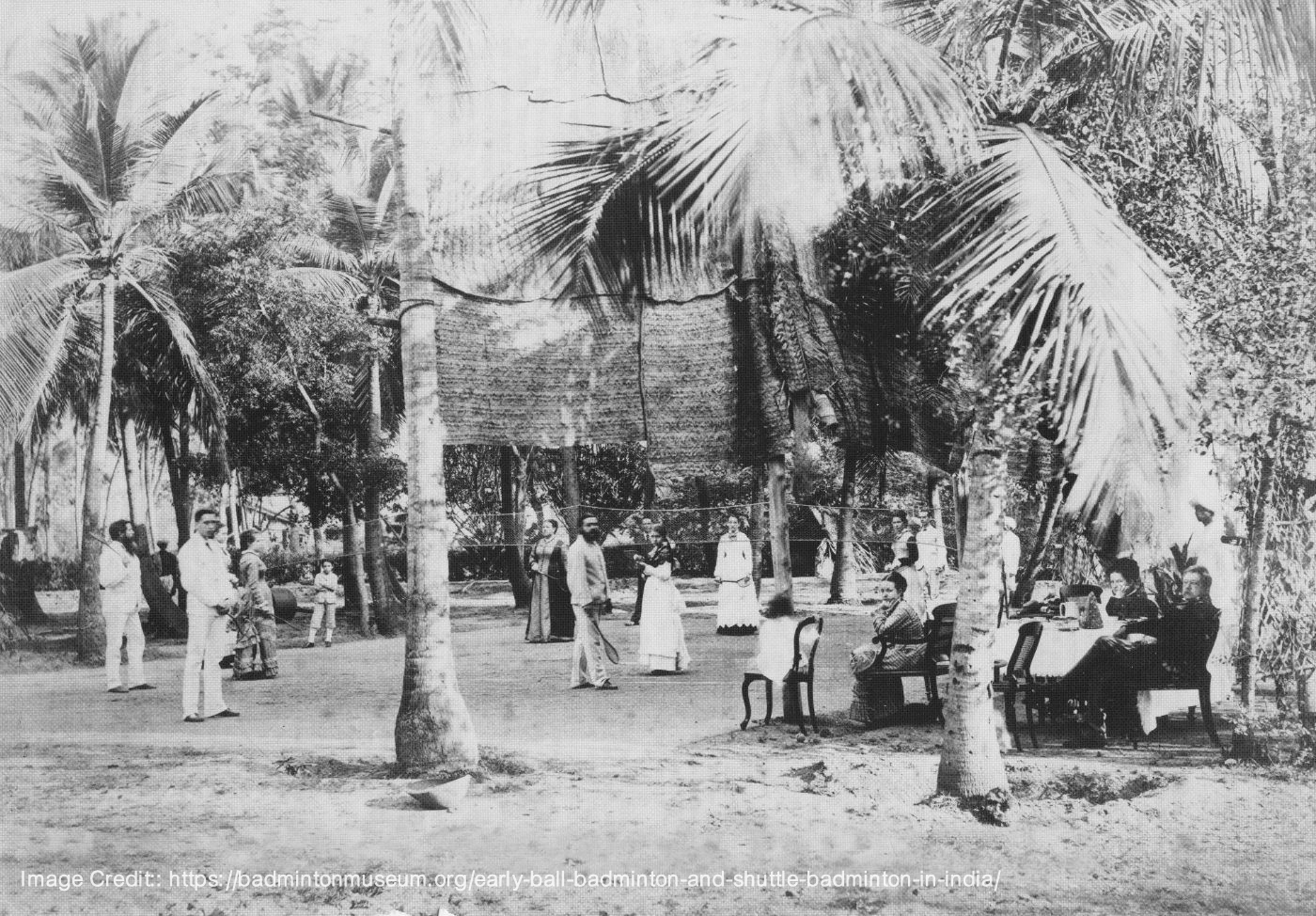
Ball Badminton originated in Tanjore (Thanjavur) in Tamil Nadu, India. Historical records indicate that the game was played as early as 1856 by the royal family of Tanjore. The sport gained the attention and support of the Maharaja of Tanjore, which helped increase its popularity throughout the region.
Because the game required very little equipment and could be played in open spaces, it became especially popular among rural youth. Students across South India embraced the sport, leading to a rapid increase in participation and organized competitions.
To regulate and promote the sport, the Ball Badminton Federation of India (BBFI) was established in 1954. The federation became one of the earliest sports governing bodies in the country. Along with the Indian Athletic Federation and the Indian Hockey Federation, it played a role in the formation of the Indian Olympic Association in 1961.
The sport later spread to Andhra Pradesh and other states across India. The first National Ball Badminton Championship was conducted in Hyderabad in 1956. As the sport continued to grow, competitions were introduced at junior and sub-junior levels to encourage young players and develop future talent.
Ball Badminton enjoys widespread popularity in India, particularly in Tamil Nadu, Andhra Pradesh, Telangana, Karnataka, Puducherry, and Maharashtra. The game is officially recognized in India and is governed by the Ball Badminton Federation of India.
Today, the federation has 34 affiliated units, including:
States such as Bihar, Jharkhand, and Nagaland have also contributed to the expansion of the sport beyond its traditional strongholds in South India.
National and All-India tournaments are regularly organized, and many competitions are now conducted under floodlights, allowing matches to be played during the evening and night. Indoor Ball Badminton has also gained popularity, providing players with an alternative to outdoor competition.
Ball Badminton is a highly competitive team sport that requires speed, coordination, and tactical awareness. Players use specially designed racquets to strike a lightweight woolen ball over a net, aiming to score points by preventing opponents from returning the ball successfully.
The game rewards:
Because many matches are played outdoors, players must also adapt to changing weather conditions, wind direction, and sunlight, making the sport even more challenging.
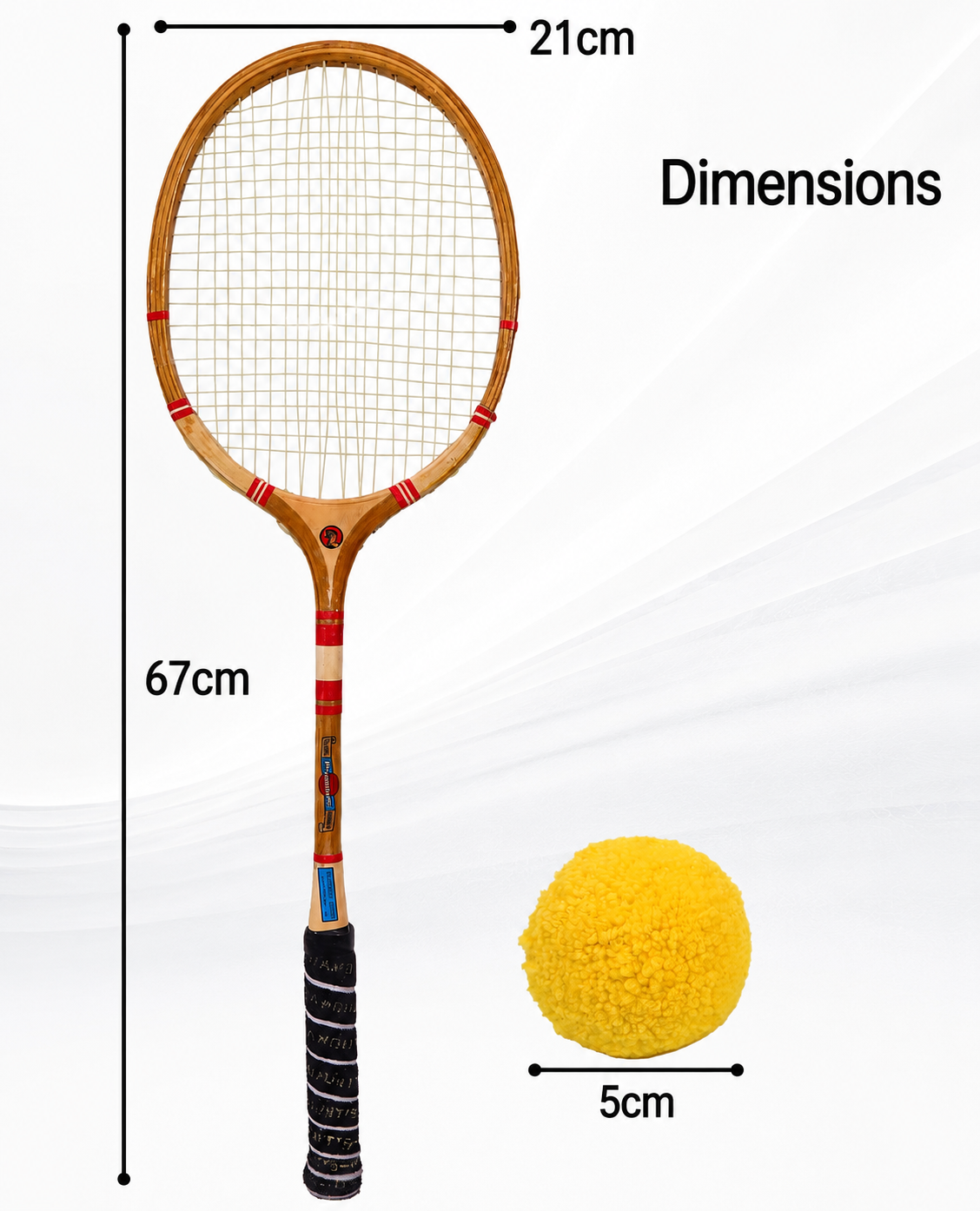
The Ball Badminton ball is made from yellow wool and is designed to travel quickly through the air while remaining easy to control.
The lightweight nature of the ball contributes to the speed and excitement of the game.
A Ball Badminton racket is lightweight and designed for rapid wrist movement and precise shot-making.
These specifications help players generate speed while maintaining control during fast rallies.
The net used in Ball Badminton is specially designed to maintain stability during outdoor play.
The net is attached to:
Additional supporting posts are fixed outside the court to keep the net properly stretched throughout the match. Hooks attached to the poles allow easy tightening whenever necessary.
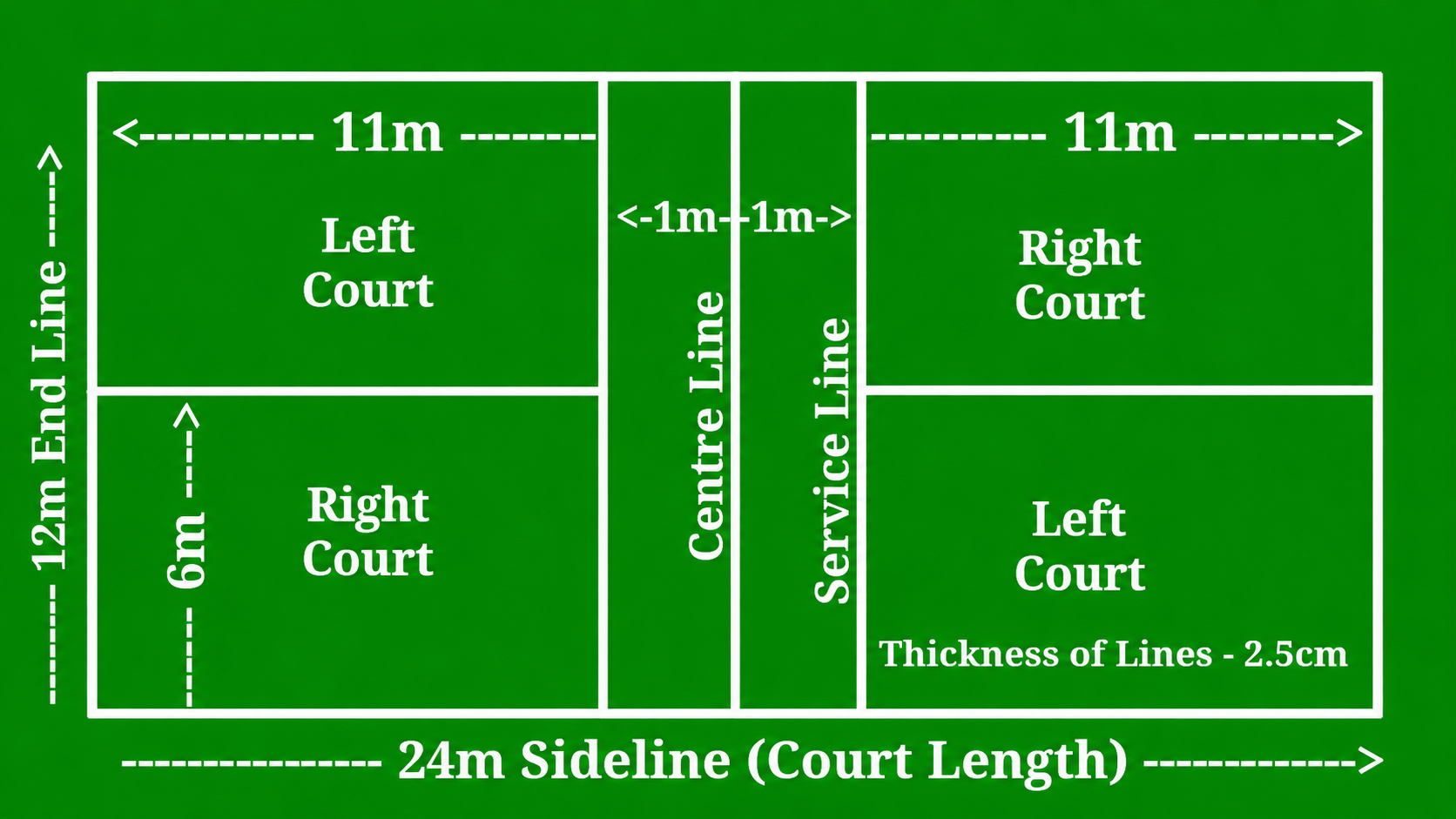
A standard Ball Badminton court for five-player teams measures:
The court is divided into two equal halves by the net positioned across the centre.
Serving Crease Lines
Serving crease lines are drawn:
Centre Line
The centre line is drawn midway between the serving crease lines and runs parallel to the sidelines. This line divides each side of the court into:
Boundary Lines
The outer limits of the court are marked with white tape.
Centre and Crease Line Markings
The centre line and crease lines must be clearly visible and are generally marked with:
These markings ensure proper player positioning and help officials enforce the rules during competition.
Over the decades, Ball Badminton has evolved from a traditional rural sport into a nationally recognized competitive game. Schools, colleges, universities, sports academies, and state associations actively promote the sport through coaching camps, championships, and talent development programs.
The introduction of floodlit tournaments and indoor facilities has further increased the game's appeal, allowing players to compete throughout the year. Today, Ball Badminton continues to attract thousands of athletes and remains an important part of India's sporting heritage.